- Home
- About Us
- Issues
- Countries
- Rapid Response Network
- Young Adults
- Get Involved
- Calendar
- Donate
- Blog
You are here
Nicaragua: News & Updates
Nicaragua was ruled by the Somoza dictatorship, backed by the US, for 30 years. After the Sandinista Revolution took control in 1979, the US assembled former Somoza National Guardsmen into a counterrevolutionary force that, for the next decade, terrorized the civilian population in an attempt to weaken popular support for the Sandinistas. The “contra war” left 30,000 people dead and forced more than 100,000 to seek refuge in the US.
Learn more here.
News Article
November 6, 2019
The rampant violence that afflicts the Northern Triangle, must be understood as a permutation of both preceding civil wars and US imperialism...The United States bears responsibility for instilling right-wing forces with a virulent anticommunism through both mobile and School of the Americas training programs...Sara Diamond argues, “Anticommunism became the American Right’s dominant motif not just because it justified the enforcement of US dominion internationally but also because it wove together disparate threads of right-wing ideology.” The Reagan foreign policy doctrine conveyed a project to “roll back revolution” and to undo gains made by struggles for decolonization. Reagan's wars in Central America followed a 100-year tradition of US military intervention. Starting in the 19th century, the US military invaded Nicaragua 3 times (1894, 1896, 1910) and occupied the nation for 20 years (1912-1933). The US sent troops to Honduras 5 times from 1903 to 1924. In Guatemala, the CIA overthrew its democratically elected president Jacobo Arbenz in 1954, laying the conditions for 30 years of civil war, and the massacre of 200,000 mostly indigenous people. In tandem with US militarization,...fruit companies restructured the region's economies toward monoculture. [Instituted was] a near-permanent open door for corporate intervention in matters of national sovereignty.
News Article
October 31, 2019
"The Central America region, especially El Salvador, Guatemala, Honduras and Nicaragua, known as the CA-4 group, have very high levels of corruption similar to those in sub-Saharan Africa," said the executive director of the Seattle International Foundation, Arturo Aguilar. "Given these disturbing trends, it’s no wonder people have very little trust in government. In fact, 65 percent of respondents think their government is run by and for a few private interests," the body said in their report.
News Article
October 16, 2019
Although mostly centered on migration, talk of Latin American foreign policy has increased as the presidential primaries near. Presidential hopefuls have ripped into President Donald Trump’s immigration policy, especially focusing on his “zero tolerance” policy. South Bend, Indiana, Mayor Pete Buttigieg has called it “dead wrong” and former Secretary of Housing and Urban Development Julian Castro has vowed to decriminalize migration and admit climate refugees who ask for asylum. But the truth is that even in a crowded pool of candidates fighting for the 2020 nomination, many have failed to address how they would work with Latin American countries to address the root causes that push Latin American and Caribbean migrants to seek a better life in the United States. As candidates gear up for the fourth presidential debate...here is what some Democratic presidential hopefuls (and former contenders) have said about Latin American foreign policy so far.
News Article
October 15, 2019
Culture, religion, nationality, language or customs, do not determine a race … Many people worldwide understand it and conduct struggles to state this “truth.” Many others only know how to exclude, thinking that excluding will make them better. Will this be the ultimate battle for a better society? The Costa Rica News brings you a special report about racism in two cultures: North America and Latin America. Racism in the United States has been gaining strength for many years, by Americans of Anglo-Saxon origin (a term that comes from the German population, northern Germany, Holland, Great Britain). It has manifested and continues to be given to minority groups. Previously, Jim Crow laws (state and local laws in the United States, promulgated by white state legislatures) emerged; such laws advocated racial segregation (separation of different groups in daily life, whether in restaurants, bathrooms, schools, hotels, casinos, among others places), and in general, all public facilities, under the slogan “separate but equal." Paul Krugman, the economist and editor of the New York Times, says that the speech of US President Donald Trump is extremely racist and anchored to the past. “In his mind, it is always 1989, and that is not an accident: the way in which the United States changed in the last three decades, both for good and for bad, is incompatible with Trump-style racism,” he states.
News Article
October 13, 2019
Hundreds of migrants from Africa, the Caribbean and Central America found themselves corralled in a migrant detention facility in southern Mexico on Sunday after a futile attempt to head north as part of a caravan aiming to reach the United States. Just before dusk, after having trudged more than 20 miles north, they were surrounded by hundreds of National Guard agents and police who persuaded the exhausted migrants to board vans back to Tapachula. Children cried, and women complained angrily about waiting months for papers. It was unclear if any would be deported.
News Article
October 8, 2019
Combat drug trafficking and climate change simultaneously: Drug trafficking and organized crime are fuelling deforestation in protected tropical forests and national parks across Central America, causing substantial economic losses. Traffickers are cutting down trees to build roads and airstrips to transport cocaine and are encroaching ever further into more remote forest areas to evade anti-narcotics operations, according to two separate studies on the problem. Environmental degradation caused by drug trafficking leads to losses of about $215 million annually in natural and cultural resources across Central America’s protected forest areas, showed estimates by report co-author Bernardo Aguilar-Gonzalez. Areas that are managed by communities record “very low forest losses”, they added. “Investing in community land rights and participatory governance in protected areas is a key strategy to combat drug trafficking and climate change simultaneously,” Aguilar-Gonzalez said in a statement.
News Article
October 1, 2019
That Donald Trump has a disturbed relationship to reality is well known, but what emerges in a recently published book is a new climax of Donald Trump's fantasies of violence ...
Event
September 26, 2019 to September 28, 2019
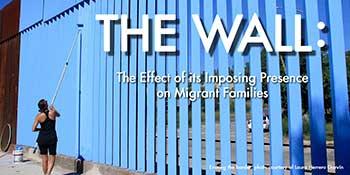
The Festival de Cine Latinoamericano celebrates Hispanic Heritage month with four films from Latin America, receptions and community dialogues. IRTF will participate in a panel discussion following the screening of The Wall on Saturday, Sep 28, at Art House, 3119 Denison Ave, Cleveland 44109. All screenings and events, including receptions, are free and open to the public.
Event
September 28, 2019
After a screening of The Wall (55min doc.), IRTF participates in a panel discussion about current immigration enforcement policies, including the vulnerability of DACA and TPS recipients. Held at Art House, 3119 Denison Ave., Cleveland 44109. Free and open to the public.
News Article
September 26, 2019
The US spends almost $5B a year attempting to intercept shipments of illegal drugs from Central America, but despite the enormous outlay, the quantities of cocaine delivered to the country have continued to rise. A new study comes to drastic results...